
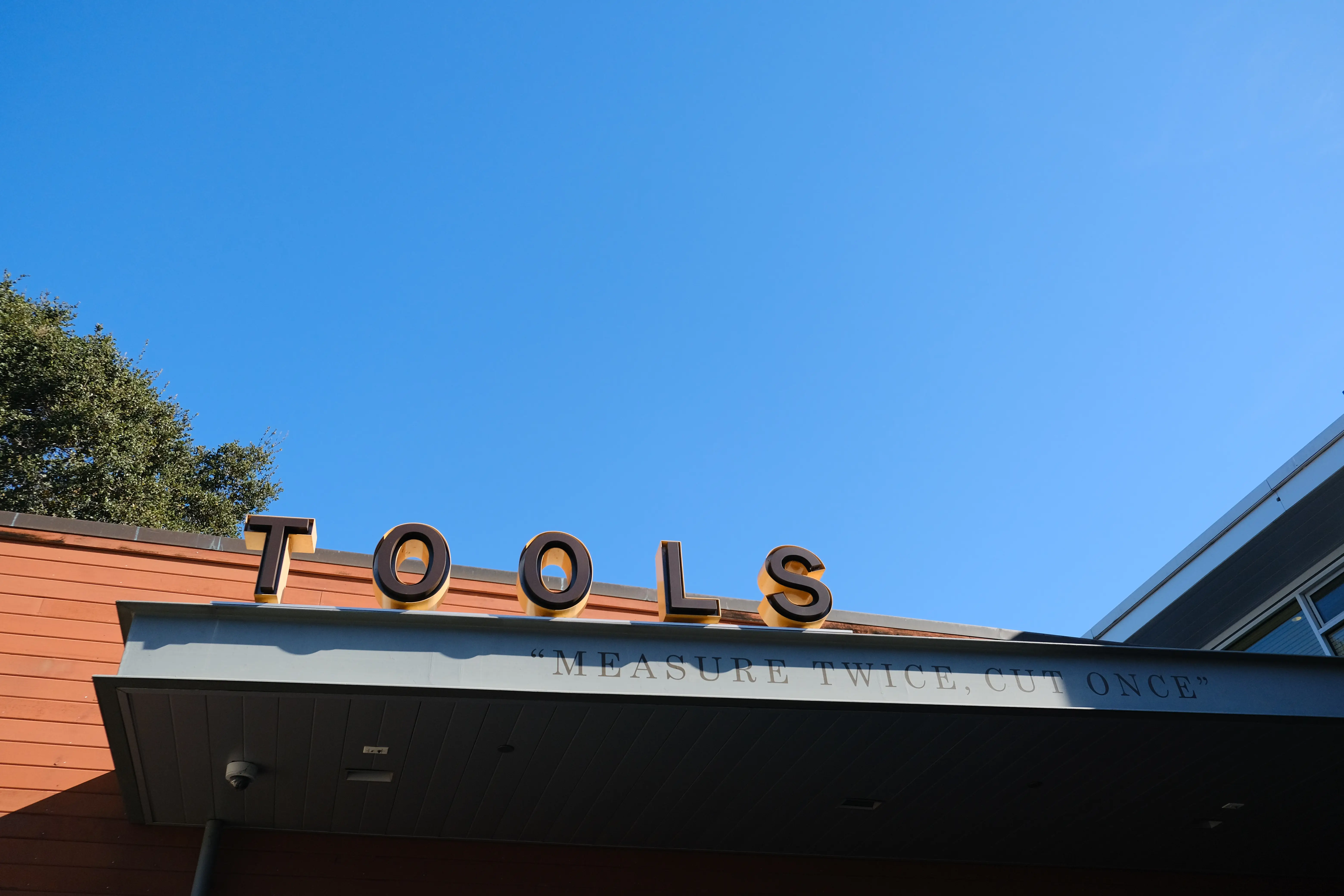
Berkeley TOol
Lending Library
We grew up at the public library. Story time. Summer reading contests. The entire collection of Star Wars novels at our fingertips. For us, the library wasn’t just about books. It was a magical place where the friendly person behind the counter could help you find the answer to any question that you could think of.
When we moved up to Berkeley for college, we discovered a new kind of library. A place where we could rent a shovel for a backyard garden project. A drill to fix a broken chair. Even an ice cream maker for playing Chef’s Table. The folks behind the counter could walk you through anything from drywall to tree trimming. Earlier this year, we spent a day in the aisles capturing the questions, queries, and quibbles of Berkeley residents from all walks of life.
The tool library has the fix for every problem

no matter how bit or small.

As head tool specialist Robert says,
“If you have the knowledge, we have the tools."
First
of
It's
Kind
The Berkeley Tool Lending Library started out of a portable trailer in 1979. A federal community development grant paid for the first 500 tools, and a single full time employee. It was a place for the entire community. From the curb to the hills.

While the neighborhood has changed, the demand for this community resource has not. Today, the collection of over 3,500 tools are managed by Robert, Angel, and Kenneth. These master librarians can tell you whether you need a set of hand sheers or a digging fork, a stand mixer or a food processor. But perhaps most of all, they offer a welcoming community space for those seeking knowledge that has all too often been lost in this digital age.
Episode #13
More Than
Just Tools
At face value, the Tool Library is just that: a collection of shelves filled with metal and wood that helps us keep things from falling apart. But when you listen to enough customers come through the door, you quickly realize it is so much more. We met one older gentleman who came in looking for a saw. After a few minutes of small talk, he also asked Robert about food processors. Turns out he didn’t need one that day, but wanted to check if one would be available in the event that he “needed to process something.”

Robert said customers like this have been coming for years. They aren’t just looking for tools to solve physical problems. They want to be listened to. To be seen. To feel like they are part of the community. In this day and age where public goods are frequently under attack, these humble aisles represent perhaps the simplest idea of a third space: a place that is neither home nor work—but gives you the tools and know-how to fix both.


Stories by Pedal Born Pictures
Copyright 2022